rAdioCUSTICA is an intermedia
project by the Czech Radio Vltava produced in collaboration with Czech
Radio's Production Center. The portal focuses on contemporary radioart
- wide range of media art forms, which try to explore potential of
radio as a dynamic medium of the 21st century. The portal is connected
with Czech Radio Vltava’s program Radioateliér, which has
been on-air since 2003 presenting newest commissions of Czech and
international acoustic art scene as well as introducing wide range of
international sonic events from musique concrete through diverse forms
of "Hörspiel" toward live radio performances.
Kunstradio presents three recent works which have been produced by
rAdioCUSTICA as Listening Proposals, as proposed to the members of the
EBU’s Ars Acustica radio art group.
1) “Kurzwellen mit Fragezeichen” by Slávo Krekovič
The composition has been freely inspired by 'processual' work of
Karlheinz Stockhausen “Kurzwellen”. It exists in various
versions and is based upon a concert improvisation using material that
has been taken from shortwave radio broadcast.
Messages broadcast on various wavelengths into the whole world –
from the clearly recognizable signal of the distant radio stations to
the mysterious world of coded satellite communication and other
technological devices – are used to go off forever while their
parallel coexistence will never be repeated. But then again it is
possible to capture them and use them in various ways.
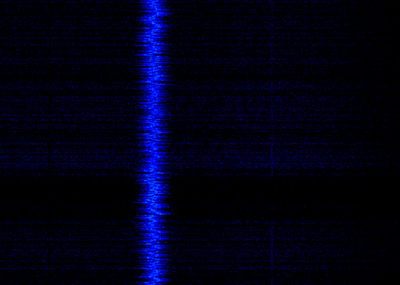
The basis of the composition has been the research of radio spectrum by
means of modern tools (so-called software defined radio). The
“radio signal” which is broadcast on various frequency
bands is subject to a series of transformation, and consequently
returns back on air, enriched now by synthetically generated
structures.
The complexity of modular analogue synthesis and the unpredictability
of radio waves complement one another in the sound stream, where
composition and improvisation fuse within one world, and so do the
analogue as well as the digital, the decision of man and the machine
– the moment of 'right here, right now' in which there is place
for both elements of order as well as for surprising coincidences.
2) „Ice Factory“ by James Wyness
In the early spring of 2013 I
contributed to a regional arts project in the Scottish Borders called
Casting the Net: Coast to Inland. The project set out to explore
aspects of our relationship with the sea and fishing: how the sea
shapes life on the coast and impacts on the inland communities; the
connections and the flow of ideas in both directions. The outcomes were
intended to effectively engage with the materiality of place and the
trades, crafts and lives of people living in the fishing town of
Eyemouth and Selkirk in the inland Borders.
I proposed a series of sound
works which would investigate, by means of field recordings, aspects of
a specific working environment and the influence of this environment on
the lives of men and women in the fishing industry. Initially I wanted
to explore the use of sound in gauging the health of a seafaring
vessel. I knew from research that sailors used to, and probably still
do, use their ears as much if not more than their eyes to judge whether
a vessel is ‘sound’, in other words whether it is sailing
or working well. This important form of occupational auscultation, or
aural diagnosis, is used across many domains of working life, from
industry to agriculture to science to domestic and everyday life.
I sought also to strengthen and
develop an existing investigation into the ethnography of technology in
the Borders, in which I was exploring industrial auscultation in the
textile industry. In this respect I set out to develop my archive of
recordings from working textile mills and to establish the extent to
which the ear of the machine operator is used in gauging the
‘health’ of his or her machine.
In terms of outcome, I proposed
a series of sound works which would be played in various empty shops
and industrial spaces in Eyemouth, a coastal town with a fishing
heritage and Selkirk, an inland town with a textile heritage. My
intention was to remap and recreate an original sonic environment and
to recontextualise this in the new spaces by means of immersive sound
installation and performance.
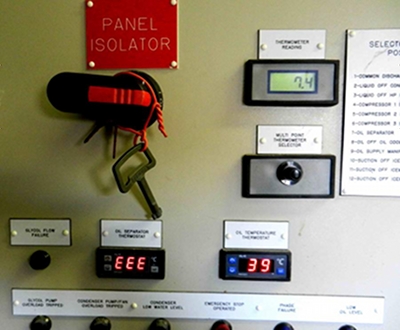
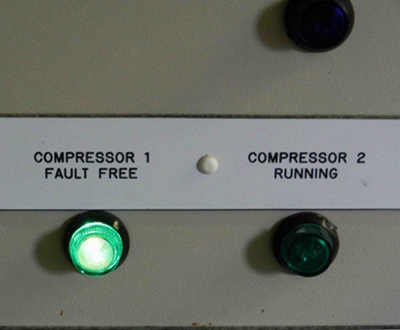
Ice factory, commissioned by
Czech Radio, is a new composition made from the sounds of the ice
factory at Eyemouth, the fishing vessel White Heather VI, and from the
sounds of objects and materials recorded in the studio. It continues my
research into the genesis and evolution of sound shapes and musical
forms. Following a lengthy research phase, compositions are typically
created with environmental field recordings and material generated in
the studio using hand-made instruments and found objects. By
juxtaposing layers of dense textures, separated out into contrasting
blocks of sound, then establishing a range of relationships between
various foreground and background layers, my aim is to make these sonic
environments function less as stereo sound-fields and more as living
evolving multidimensional organisms. This compositional work is
informed by a range of extra-musical interests, in particular aspects
of the biological sciences, semiotics and anthropology. An overall
intention in all my compositional work is that the listener will
‘listen through’ the composition to a range of themes and
topics, activated largely by means of socially engaged working
procedures. In the ice factory the abstraction of the working
soundscape is underpinned by a very real physical and material working
environment.
(James Wyness)
3) „Between the Words“ by Jakub Rataj
The composition 'Between the
Words' came into existence within the ten months I spent in Paris. It
is a reflection of sounds, spaces, pictures and ideas which stayed in
my memory in order to create a condensed view of a single time interval
spent in one city.
The crackling of bamboo,
ripping of stems, and crushing of leaves is what the first part of
'Between the Lines' is composed of. I was being cruel to such a
fragile, yet solid plant (the bamboo I have been destroying like this
had already dried…), and this is how I handled the sound
recording as well. The organic sound object gradually became
transformed into a mechanical, artificially constructed sound entity
– just like bamboo groves turn into artificial lay-bys of a
metropolis. By means of tearing and cutting heartlessly, I changed the
original, 'natural' sound into a broke-down machine which sometimes
gets jammed – into a small robot who knows that he has already
been replaced by new, better models, and yet he is trying hard to keep
up with the rhythm of time.
I have used the poem called
'One Artist' by Vladimír Kokolia as construction material for
the composition 'One' which is for seven instruments and electronics,
and it came into existence at about the same period of time. I was
seeking that which is hidden between the lines of the poem, and I found
smacking and breathing. Breathing in as well as breathing out carries
in itself natural tension that is created before the word comes out,
and the release that follows the utterance. This empty space between
the two parts of discourse is in reality filled up with expectation of
receiving information that would not come, and instead of that, it
becomes an autonomous sound independent on the meaning of words, thus
creating the second part of 'Between the Words.'
Recordings of the city
soundscape represent the third part of the composition. These are sonic
images of individual places which are being sketched in more and more
detail, just like when you paint a moustache and a top hat on the
picture of a fish seller, or when the petanque ball makes the nearby
church bell ring out.
(Jakub Rataj)
Link: http://www.rozhlas.cz/radiocustica/portal/
|
 PLAY
PLAY